Direct answer
Yes, some light-filtering shades can reveal silhouettes, movement or room details at night when interior lights are on. The exact view depends on fabric density, colour, distance, room brightness and how closely a person stands to the shade. For reliable night privacy, use an opaque or blackout layer.
Key takeaways
- Light-filtering describes daylight control, not guaranteed night privacy.
- Interior lighting can make silhouettes visible from outside.
- A sample must be tested after dark, not only in a showroom.
- Layering adds dependable privacy without losing daytime softness.
Why a daytime privacy shade changes after dark
During the day, outdoor light is usually much brighter than the room. A light-filtering shade scatters daylight and can make the interior difficult to see. After sunset, the room may become the brighter side when lamps are switched on. Shadows and movement can then become visible from outside.
The effect is strongest when a person stands close to the shade, a bright lamp is behind them or the fabric has a relatively open weave.
What might someone outside actually see?
| Fabric or condition | Possible night-time view |
|---|---|
| Dense pale light-filtering fabric | General glow and soft silhouettes may be visible. |
| Open solar-screen fabric | Room details may be visible when indoor lights are bright. |
| Dark screen fabric | Outward view can be clearer, but night privacy may still be weak. |
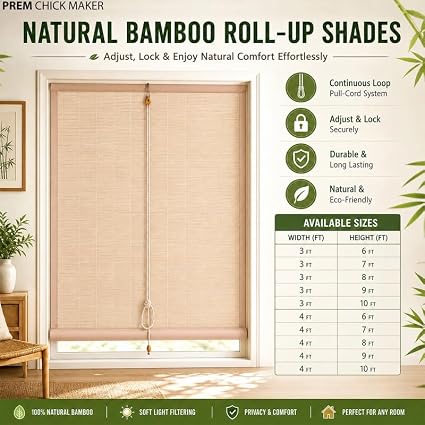
| Close bamboo weave | Shapes may be obscured, though gaps can reveal movement. |
| Loose bamboo weave | More light and silhouette visibility. |
| Opaque or blackout fabric | Strong privacy through the material; edge gaps may remain. |
How to test a shade properly
- Place a full-size sample against the window.
- Wait until it is dark outside.
- Switch on the normal room lights.
- Stand close to the shade and then move farther away.
- Ask someone to view the window from outside at different distances.
- Repeat with lamps in different positions.
A phone flashlight held behind a tiny sample can exaggerate the result, while a bright showroom can hide the real night condition. Test in the actual room whenever privacy is important.
Ways to improve night privacy
Add an opaque second layer
Use curtains, an opaque roller or a blackout blind at night while keeping the light-filtering shade for daytime use.
Choose a dual or zebra system carefully
Ensure the solid bands overlap fully. Small alignment gaps can still allow views.
Use a privacy liner
Roman and some woven blinds can include a privacy or blackout lining.
Control side gaps
Use sufficient overlap, side channels or curtains where people can see around the edges.
Move bright lamps away from the window
This reduces strong backlighting but should not be the only privacy solution.
Which rooms need the strongest solution?
Bedrooms, bathrooms and street-level rooms should use a product selected specifically for night privacy. Living rooms on upper floors may accept softer privacy, while offices facing another building may need an opaque option for confidential work.
Balcony bamboo blinds can reduce views from a distance, but open sides, gaps and external lighting still matter. The Chick Blinds can help compare the effect of weave, backing and panel overlap.
Privacy versus blackout
A privacy shade limits visibility. A blackout shade is designed to block most transmitted light through the material. They often overlap, but they are not identical. A blackout blind can still leak light at the edges, while a privacy lining can block views without making the room fully dark.
The lighting principle in simple terms
Visibility depends on contrast. Your eyes see objects more easily on the brighter side of a semi-transparent material. During the day, the outside may be extremely bright, causing the shade to reflect and scatter light. At night, a lamp behind a person can make that person the brightest shape in the scene, so the silhouette becomes visible.
Distance matters. Someone standing close to the fabric creates a sharper shadow than a person farther inside the room. A light-coloured wall and ceiling may spread illumination across the whole room. A dark room with one low lamp can reveal less, but lighting changes are not a dependable substitute for an opaque covering.
A realistic night-privacy test
- Use a sample large enough to show the true weave.
- Install or hold it in the actual window plane.
- Wait until the exterior is fully dark.
- Switch on the lights normally used in the room.
- Stand near the shade, then move deeper into the room.
- View from directly outside and from diagonal angles.
- Check whether side gaps reveal a clear line of sight.
Repeat the test with curtains open and closed if the room will use layers. A showroom demonstration during the day cannot answer a night-privacy question.
Three levels of privacy improvement
Low-cost improvement
Move strong lamps away from the window and add a correctly sized curtain. This reduces backlighting and covers side gaps, but the curtain must be closed when privacy matters.
Mid-range improvement
Use a dual arrangement: a light-filtering roller or bamboo blind for daylight and an opaque blind or curtain for night. Each layer performs one job well.
High-control improvement
Choose an opaque or blackout system with sufficient overlap, side channels or a well-fitted cassette where the room requires dependable privacy and darkness.
The Chick Blinds can help compare samples according to the exact lighting, room use and opening rather than making a broad promise from the term “light-filtering.”
Room-by-room night privacy decisions
Bedroom
Use an opaque or blackout layer when the window faces a street, balcony or neighbouring building. A light-filtering shade can remain as the daytime layer, but it should not be the only privacy product unless it has been tested after dark.
Living room
Soft silhouettes may be acceptable in an upper-floor living room, while a ground-floor window needs stronger coverage. Curtains paired with a light-filtering roller offer flexible control without removing daylight during the day.
Bathroom
Choose dependable opacity and moisture suitability. Frosted glass or static-cling film can provide continuous privacy, with a washable blind added for adjustable light control.
Home office
A solar screen may manage glare but reveal the room at night. Add an opaque layer when confidential documents or video calls are visible from a facing building.
Balcony door
Check the full opening, not only the glass. Side views, open balcony edges and gaps between panels may reveal more than the fabric itself. Layered interior curtains or a closer outdoor screen can improve coverage.
The final decision should reflect who can see the window, from what height and at what distance. Night privacy is a site-specific question, not a universal fabric label.
Final night-privacy buying check
Before ordering, ask the seller to identify the fabric as sheer, light-filtering, room-darkening or blackout and to explain the likely evening result. Confirm the mounting position, side overlap and whether a second layer can be added later. A written answer and a tested sample are more useful than a general statement such as “full privacy.”
Frequently asked questions
Can neighbours see through light-filtering shades at night?
They may see silhouettes, movement or more detail when interior lights are on. Visibility depends on the fabric and lighting.
Do darker light-filtering shades give more privacy?
Colour affects reflection and outward view, but a dark screen is not automatically private at night. Fabric openness and room brightness still matter.
Are solar shades private at night?
Solar shades are mainly designed for glare, heat and daytime view control. Many provide weak night privacy when indoor lights are on.
What gives the best night privacy?
An opaque or blackout blind, lined Roman shade, fully closed solid slats or a layered combination generally provides stronger night privacy.