Direct answer
Privacy blinds reduce the view through a window using opaque material, overlapping slats, alternating solid and sheer bands, a close weave or a liner. Daytime one-way visibility depends on the outside being brighter than the room, so that effect can reverse at night when indoor lights are on.
Key takeaways
- Privacy and blackout are not the same feature.
- Daytime one-way visibility depends on the lighting difference.
- Light-filtering and solar fabrics may reveal silhouettes at night.
- Opaque, lined or fully closed blinds provide stronger night privacy.
What makes a blind a privacy blind?
A privacy blind is any window covering designed to limit how clearly people can see through the opening. It may use an opaque sheet, adjustable slats, two layers of fabric, tightly woven natural material or an additional backing.
The word “privacy” does not always mean complete visual blocking. A product may provide excellent daytime privacy while still showing shapes at night. Always ask what happens in four states: daylight with lights off, daylight with lights on, night with lights off and night with lights on.
How one-way visibility really works
One-way visibility is mostly a lighting effect. People on the brighter side see reflections and have more difficulty seeing into the darker side. During the day, the exterior is normally brighter, so a person inside may see out through a solar screen or perforated material while someone outside sees less detail.
At night, interior lighting can make the room the brighter side. The effect reverses and people outside may see silhouettes, furniture or clear movement. One-way privacy film manufacturers also explain that standard reflective effects do not provide reliable night privacy.
Main types of privacy blinds
| Blind type | Day privacy | Night privacy | Light control |
|---|---|---|---|
| Blackout roller blind | Strong when closed | Strong when closed | High, with possible edge gaps |
| Light-filtering roller blind | Moderate to strong | Varies; silhouettes may show | Soft daylight |
| Solar screen blind | Good in brighter outdoor light | Usually weak with indoor lights on | Glare and view control |
| Zebra or day-night blind | Adjustable | Stronger when solid bands overlap | Flexible |
| Venetian or vertical slats | Adjustable | Strong only when fully closed and aligned | Directional |
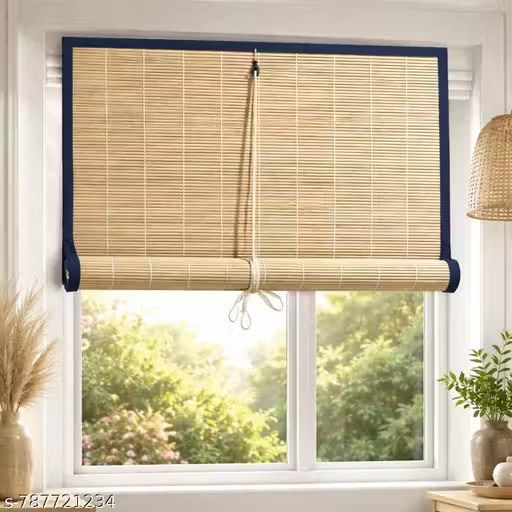
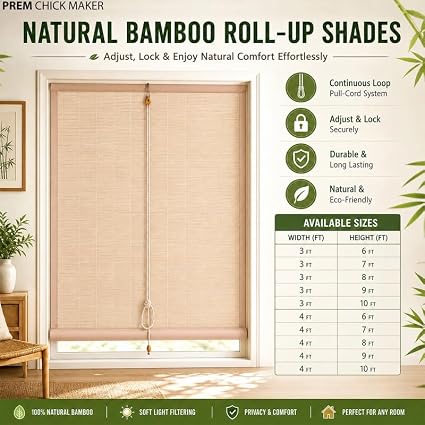
| Bamboo chick blind | Depends on weave and backing | Loose weave may show shadows | Filtered natural light |
| Roman blind with privacy lining | Strong | Strong | Soft or blackout depending on lining |
Openness factor and fabric density
Solar-screen fabrics are often described by an openness factor. A more open weave generally preserves more outward view and airflow but provides less privacy and light blocking. A tighter weave reduces the view and glare but also makes the room darker.
Colour matters too. Darker screen fabric can improve the view from the darker side, while lighter fabric can reflect more light. However, neither colour changes the fundamental night-time limitation when the room is brightly illuminated.
Best privacy choices by room
Bedroom
Use an opaque roller, lined Roman blind or another product intended for full closure. Add side channels or curtains where edge light and side views are a concern.
Bathroom
Choose a moisture-suitable opaque material. Frosted glass can add permanent privacy, while a blind provides adjustable coverage.
Living room
A layered arrangement works well: a light-filtering blind for daytime comfort plus curtains or an opaque blind for the evening.
Balcony
Bamboo and PVC chick blinds can improve shade and privacy, but privacy depends on weave, panel gaps, side exposure and lighting. Add backing or choose a closer material where evening privacy is essential.
Office
Solar or vertical blinds can control glare while preserving daylight. Meeting rooms may need an opaque option for presentations and confidentiality.
How to test privacy before buying
- Hold the material sample against the glass in daylight.
- View it from both sides.
- Repeat after dark with the room lights on.
- Check for silhouettes from several metres away.
- Look at side gaps, the bottom gap and panel overlaps.
- Ask whether a privacy or blackout liner is available.
The Chick Blinds can help compare bamboo, PVC, roller, Roman, zebra and vertical options based on daylight, night privacy, room use and exposure.
Sources and further reading
Privacy changes through the day
Privacy is not a permanent property of a fabric; it is the result of material, distance, viewing angle and light. In the morning, a bright street and a relatively dark room may make a solar screen appear private. In the evening, a ceiling light or lamp behind a person can create a clear silhouette. At night, even a small open side gap can reveal more than the centre of the fabric.
Upper-floor apartments may need less protection from people at street level but more from a facing tower. Ground-floor rooms usually need stronger coverage and careful attention to side angles. A balcony may be screened from directly opposite yet remain visible from a neighbouring balcony above or to the side.
When comparing samples, do not ask only, “Can I see through it?” Ask what is visible from several positions, at different distances and under the lighting you actually use.
Privacy planning for Indian homes and balconies
Indian apartments often combine sliding doors, balcony grills and wide openings. A single indoor roller blind may control the glass but leave the balcony edge exposed. Bamboo or PVC chick blinds at the outer opening can add shade and privacy, while an indoor curtain supplies stronger evening coverage. The best solution may therefore be layered rather than one product.
Bedrooms facing another building should use an opaque or lined option for night-time security. Kitchens need a washable material and safe clearance from heat. Bathrooms require moisture-resistant opacity. Living rooms can often use a light-filtering blind during the day with an outer curtain for the evening.
A privacy performance checklist
- View the sample from both sides in daylight.
- Repeat the test after dark with all normal room lights on.
- Stand close to the shade and then several metres away.
- Check the view from diagonal angles and neighbouring balconies.
- Inspect side, top and bottom gaps.
- Confirm whether a liner, second blind or curtain can be added later.
- Consider ventilation and door access before increasing overlap.
A well-designed privacy solution balances visibility, daylight, airflow and convenience. Complete opacity is not always necessary in a living room, but it may be essential in a bedroom or bathroom. The Chick Blinds can compare bamboo, PVC, roller, Roman, zebra and vertical systems according to the actual opening and lighting conditions.
Frequently asked questions
Do privacy blinds provide complete privacy?
Some opaque blinds provide strong privacy when fully closed. Light-filtering, solar and loosely woven blinds may provide only partial privacy, especially at night.
Can people see through privacy blinds at night?
They may be able to see silhouettes or details when the room is brighter than outside. Use an opaque or lined blind for dependable night privacy.
Are privacy blinds the same as blackout blinds?
No. Privacy limits visibility; blackout aims to block light. A privacy fabric may still transmit daylight, while a blackout product may still have light gaps around its edges.
Are bamboo blinds private?
Privacy depends on the bamboo weave, backing, panel overlap and lighting. A close weave or added liner provides more privacy than an open natural weave.