Direct answer
Window blinds are much older and more international than their names suggest. Horizontal slat coverings existed long before modern aluminium blinds; Indian chik blinds developed as woven natural screens; and today’s systems combine centuries-old shade principles with precise fabrics, motors and automated light control.
Key takeaways
- “Venetian” does not mean the first slatted blinds were invented in Venice.
- Indian chik blinds are a long-established craft using narrow woven natural strips.
- Blind performance depends as much on gaps and operation as on material.
- Modern automation changes when blinds move, not the basic physics of shade and privacy.
Fact 1: Window shade is an ancient problem
People have used fabric, reeds, wood and other materials for centuries to reduce glare, heat and unwanted views. Modern products are more precise, but the basic goals—shade, privacy, ventilation and decoration—are old.
Fact 2: Venetian blinds have a complicated name
Horizontal wooden slat coverings are associated with trade routes and several regions rather than a single simple invention story. The term “Venetian” became attached to the style in Europe, even though similar ideas existed elsewhere.
Fact 3: Aluminium changed mass-produced blinds
Thin, durable aluminium slats made horizontal blinds lighter and easier to manufacture at scale in the twentieth century. Their directional slats remain useful because they can redirect light instead of only covering or uncovering the window.
Fact 4: Indian chik is both practical and decorative
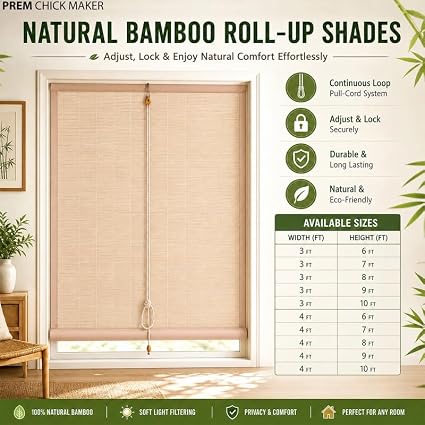
Traditional chik blinds use narrow bamboo or reed-like strips bound into a flexible screen. Skilled preparation matters: strips must be split, smoothed and woven evenly so the screen rolls and hangs correctly.
Fact 5: A blind can improve privacy without being opaque
A close weave, angled slat or screen fabric can disrupt the direct view while still transmitting daylight. However, daytime privacy can weaken at night when interior lights make the room brighter than outside.
Fact 6: Blackout material does not guarantee a pitch-black room
Light can pass around the top, sides and bottom even when the fabric itself is opaque. Side channels, sufficient overlap, a cassette or layered curtains are used when edge light matters.
Fact 7: Wider is not always better
A single oversized panel may look simple but become heavy, slow or difficult to access around a door. Dividing a balcony into balanced panels can improve operation and maintenance.
Fact 8: Dark and light solar fabrics behave differently
Darker screen materials can preserve outward view and reduce glare, while lighter surfaces can reflect more visible light. Privacy still changes with weave openness and the lighting difference between inside and outside.
Fact 9: The mounting position changes performance
An outside mount can cover the recess and reduce side gaps. An inside mount creates a neat appearance but requires depth and may allow more edge light. The same blind can perform differently in the two positions.
Fact 10: Natural bamboo is not automatically weatherproof
Bamboo can be durable in an appropriate setting, but untreated natural material is not fully waterproof. Regular direct rain and poor drying can shorten its life. PVC or another weather-suitable material may be better for exposed locations.
Fact 11: Smart blinds still need good basic design
A motor cannot correct an undersized blind, weak bracket or unsuitable material. Motorisation is most useful when the opening, tube, power access and manual override are planned correctly.
Fact 12: The best blind often uses more than one layer
A light-filtering blind can manage daytime glare, while an outer curtain supplies night privacy. A bamboo blind can add texture, while a liner strengthens privacy. Layering lets each material perform a specific job.
Sources and further reading
- Architectural Digest: Venetian blinds and their modern return
- Architectural Digest: Indian bamboo chik craftsmanship
The Chick Blinds works with both long-established natural blind ideas and modern roller, Roman, zebra, vertical and PVC systems.
A short timeline of blind innovation
Early window coverings used the materials available locally: woven reeds, cloth, timber shutters and screens. Adjustable slats introduced the ability to redirect light rather than simply block it. Industrial metal production made thin Venetian slats widely affordable. Roller mechanisms simplified operation using a tube and spring or chain. Later, technical fabrics added solar control, and compact motors allowed schedules and remote operation.
Indian chik blinds represent a parallel tradition based on split natural strips and skilled binding. Their continued use shows that innovation is not always replacement. A centuries-old shading idea can remain useful when adapted with better cords, finishing and custom measurements.
Small mechanical details make a large difference
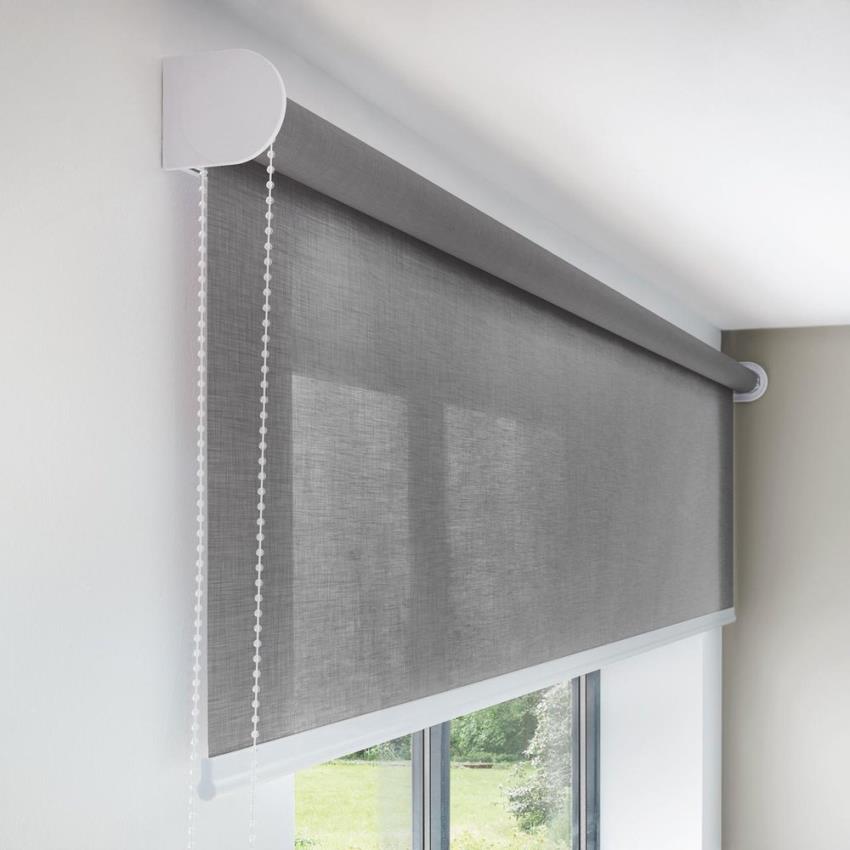
A roller blind depends on tube diameter, bracket alignment and fabric attachment. A Roman blind depends on the spacing of rods, rings and lift cords. A vertical blind depends on carriers inside the track. A bamboo chick blind depends on binding, pulley position and balanced rolling.
This means two products that look similar in a photograph can perform very differently. Mechanisms are largely hidden when the blind is installed, yet they determine whether it operates smoothly after repeated use. Good buying requires looking beyond colour and pattern.
What these facts mean for a modern buyer
- Choose the operating system before becoming attached to a colour.
- Ask how a very wide opening will be divided and supported.
- Remember that blackout fabric still needs good edge coverage.
- Test one-way or light-filtering privacy after dark.
- Match natural material to moisture and weather exposure.
- Use motorisation for a practical reason such as height, schedule or accessibility.
- Keep maintenance and repair in mind at the quotation stage.
The history of blinds is a history of balancing light, air, privacy and effort. The Chick Blinds applies those same principles to custom bamboo, PVC, roller, Roman, zebra and vertical projects today.
Blind terms that are often confused
A shade generally uses a continuous piece of fabric or woven material, while a blind often uses slats, although everyday language and regional usage overlap. In India, “chik” or “chick” commonly refers to a woven roll-up screen, often made from bamboo or similar strips. A roller blind uses material wound around a tube. A Roman blind forms soft horizontal folds. A zebra or day-night blind uses alternating sheer and solid bands.
“Blackout” describes light transmission through the material, not necessarily the complete room result. “Room-darkening” usually allows more light than blackout. “Light-filtering” softens daylight but does not guarantee night privacy. “Solar screen” refers to a technical open weave intended to manage glare, view and solar exposure; its openness factor influences performance.
“Water-resistant” and “waterproof” should not be used as if they mean the same thing. Natural bamboo may tolerate occasional humidity yet still be unsuitable for regular direct rain. An outdoor product also needs hardware and fixing suitable for wind and moisture, not only a washable surface.
Understanding these terms makes quotations easier to compare and prevents one attractive label from replacing a proper material and installation specification.
Frequently asked questions
Why are Venetian blinds called Venetian?
The name became associated with horizontal slat blinds in Europe, but the history of slatted window coverings involves wider trade routes and earlier precedents.
What is an Indian chik blind?
It is a flexible woven screen commonly made from narrow bamboo or similar natural strips, used for shade, filtered light and privacy.
Do blackout blinds block every bit of light?
The fabric can block transmitted light, but gaps around the blind may still admit light unless the installation uses overlap or channels.
Are smart blinds more energy efficient?
Automation can help blinds move at useful times, but savings depend on the window, climate, material, fit and operating schedule.