Direct answer
Professional installation is usually worth paying for when a blind is custom-made, wide, heavy, mounted at height, fitted to an uneven opening or expected to work smoothly for years. DIY can be reasonable for a small ready-made blind when you already have the correct tools and know the fixing surface.
Key takeaways
- Professional fitting reduces measurement, drilling and alignment risk.
- DIY suits small, lightweight and replaceable ready-made blinds.
- Wide bamboo, outdoor, Roman, roller and motorised blinds need extra planning.
- Compare the complete job cost, not only the installer’s labour charge.
The real cost-benefit answer
Paying for blind installation is not only about saving an hour with a drill. You are paying someone to confirm the opening, select suitable fixings, keep the headrail level, protect the mechanism and test the finished blind. Those details matter most when the product is made to measurement and cannot simply be returned to a shelf.
A small ready-made blind on a square, accessible window can be a manageable DIY job. A custom bamboo blind, PVC chick blind, roller blind, Roman blind or wide balcony blind carries more risk because a measuring or drilling error can cost more than the fitting charge you hoped to avoid.
What a professional installer actually does
Checks the opening before drilling
Window recesses can be narrower at the bottom than the top. Plaster may be uneven, a handle may project into the blind path, or a balcony grill may leave limited bracket space. An installer checks these conditions and confirms whether an inside, outside, wall or ceiling mount is practical.
Matches the fixing to the surface
Concrete, brick, timber, metal, tile and gypsum board require different drill bits, screws and anchors. A bracket can look secure on installation day but loosen after repeated raising and lowering when the fixing is not suitable for the load.
Balances the blind
A roller tube that is slightly out of level may track to one side. A wide bamboo chick blind may become heavy and awkward if supporting points or panel divisions are poorly planned. Professional fitting helps align the operating system and distribute weight.
Tests safety and operation
The installer should operate the blind several times, check clearance around handles and doors, secure loose control chains or cords and explain basic care. This final adjustment is part of the value.
When DIY installation makes sense
DIY can be a sensible option when the blind is inexpensive, lightweight and made in a standard size; the opening is easy to reach; you understand the wall material; and you already own a steel tape, level, drill, correct bit and suitable anchors.
- The product has clear manufacturer instructions.
- The mounting points are visible and accessible.
- No electrical wiring, tiles or fragile plaster complicate drilling.
- A small error would not make an expensive custom blind unusable.
- You can safely work at the required height.
DIY becomes less attractive for tall windows, extra-wide openings, doorways, linked panels, exposed balconies, motorised products or installations that must align across several windows.
Hidden DIY costs people forget
| Common mistake | Possible result |
|---|---|
| Measuring the width only once | The blind catches in a narrower part of the recess. |
| Making your own deduction | A custom blind arrives too narrow and leaves large gaps. |
| Using weak wall plugs | The bracket loosens under repeated operation. |
| Mounting a roller out of level | The fabric travels sideways and rubs against the bracket. |
| Ignoring a handle, grill or door swing | The blind collides with existing hardware. |
| Making one oversized bamboo panel | The blind becomes unnecessarily heavy to lift. |
Other costs include buying tools for one job, patching unwanted drill holes, replacing damaged brackets and spending time troubleshooting. Some custom products have limited return options once manufactured to the dimensions supplied by the customer.
Professional fitting or DIY: a quick decision
Choose professional fitting
Custom size, expensive material, wide opening, high window, uneven wall, tiled surface, outdoor exposure, motorisation or several blinds that must align.
Consider DIY
Small ready-made blind, solid and accessible mounting surface, correct tools, clear instructions and low replacement risk.
Before accepting any quotation, ask whether it includes final measurement, brackets, installation, adjustment, old-blind removal and travel. The lowest labour price is not necessarily the lowest completed-project cost.
Getting better value from blind installation
- Share clear photographs of the opening, corners, handles and grill before the visit.
- Ask how a wide balcony will be divided into practical panels.
- Confirm whether the product is suitable for direct sunlight, dust, moisture and rain.
- Keep the floor and mounting area accessible on installation day.
- Test the blind several times before the installer leaves.
- Ask for care instructions and clarify the applicable product or fitting warranty.
The Chick Blinds provides custom measurement and installation support for bamboo blinds, chick blinds, PVC outdoor blinds, roller blinds and related window treatments across Delhi NCR service areas. Inspection charges may start from ₹300 and go up to ₹500 depending on distance and project size.
Installation risk changes by blind type
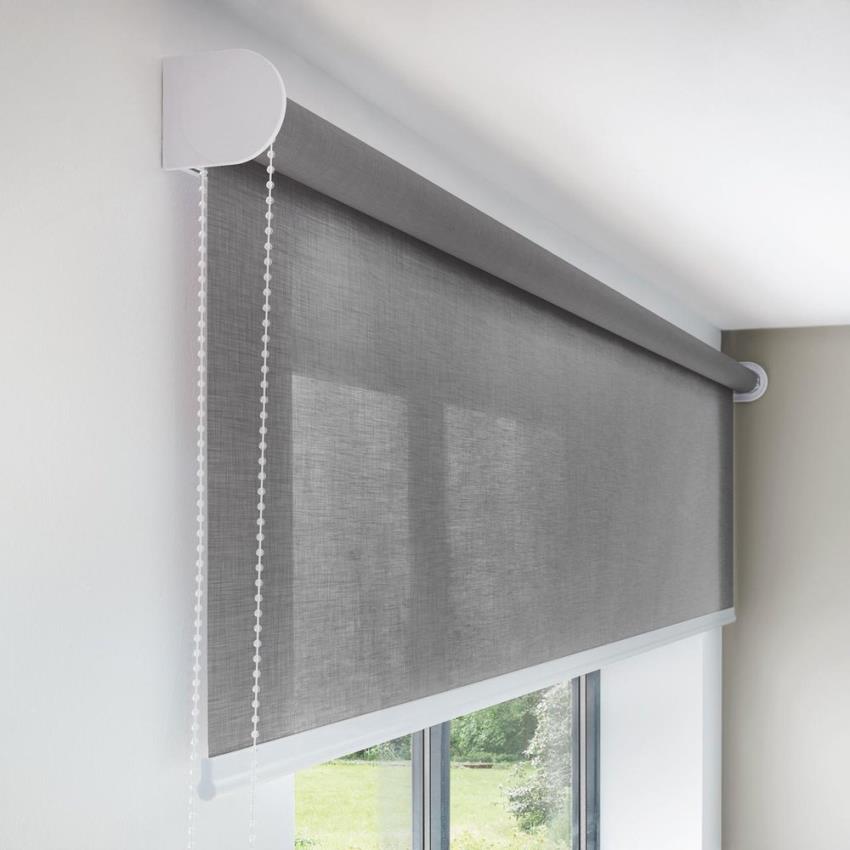
Not every blind carries the same installation risk. A lightweight ready-made roller blind is usually simpler than a made-to-measure Roman blind, a long vertical track or a wide outdoor bamboo chick blind. Roller systems need a level tube so the fabric does not track sideways. Roman blinds need balanced lift cords and a clean fold path. Vertical blinds need an accurately level headrail so the louvres hang evenly. Bamboo chick blinds can become surprisingly heavy when the opening is wide, so panel division, pulley position and supporting points need careful planning.
Outdoor work adds another layer. Wind pressure, rain direction, metal grills, balcony doors and exposed fixings can affect both safety and useful life. A blind that appears secure in calm weather may behave differently during a storm. Professional installers should therefore assess the complete opening rather than simply copying the width of the glass.
Motorised blinds need additional checks for power access, charging, control range, tube strength and a practical manual override. The motor is only one component; incorrect alignment or an overloaded tube can still cause poor operation. This is why labour should be judged in relation to the product, not as one flat task.
Questions to ask before approving installation
A professional quotation should be specific enough for you to understand what is being supplied and who is responsible for each stage. Ask whether the installer will take the final measurements or use figures supplied by you. Confirm the mounting position, number of brackets, control side, panel divisions, material finish, removal of an old blind and any extra charge for difficult height, tile, metal or parking restrictions.
- Will the same person who measures also supervise the fitting?
- What happens if the opening is not square?
- Are brackets, screws, anchors and finishing covers included?
- How will cords or chains be secured safely?
- Will the blind be tested through several complete cycles?
- What after-sales support applies to mechanism and fitting?
Keep the final dimensions and specification in writing. A short message showing the approved colour, finished width, drop, mount and control side can prevent a costly misunderstanding. For custom products, verbal assumptions are not enough.
A practical Delhi NCR decision guide
Delhi NCR installations often involve concrete walls, tiled kitchens, metal balcony grills, false ceilings, high-rise access rules and society parking or entry restrictions. Dust, intense west-facing sun and seasonal rain also influence the choice. A balcony in Noida or Gurugram that receives direct afternoon sun may need a different material and panel layout from a protected bedroom window in South Delhi.
Professional help becomes more valuable when the site includes an extra-wide balcony, a door that must remain accessible, a fragile surface or a product that is manufactured only after final measurement. For a small standard blind on a straightforward solid wall, DIY may still be reasonable for a confident homeowner.
Frequently asked questions
Is it cheaper to install blinds yourself?
DIY avoids a fitting charge, but it may cost more when a custom blind is measured incorrectly, hardware is damaged or the product must be remade.
How long does professional blind installation take?
A simple single-window fitting can be quick. Multiple rooms, wide balconies, difficult surfaces and motorised systems require more time. The installer should estimate this after reviewing the openings.
Should blinds be measured before ordering?
Yes. Width, height, depth, mounting position and obstructions should be confirmed before a custom blind is produced.
Does The Chick Blinds provide measurement and fitting?
The Chick Blinds provides measurement and fitting support for custom bamboo, chick, PVC, roller and related blind requirements across its service areas.