Direct answer
Bamboo blinds add natural texture, filter harsh sunlight and can suit custom windows and balconies. Their limitations are variation in natural colour, incomplete blackout, possible visibility through open weaves and sensitivity to regular moisture unless the material and finish are intended for outdoor use.
Key takeaways
- Bamboo offers warm natural texture and filtered daylight.
- Privacy depends on weave density, backing and panel gaps.
- Untreated natural bamboo is not fully waterproof.
- Correct sizing, balanced panels and regular dry cleaning improve performance.
Why people choose bamboo blinds
Bamboo blinds, also called chick or chik blinds in many Indian settings, use narrow natural strips woven into a flexible screen. Their appeal comes from the combination of shade, texture and craftsmanship. They can soften harsh daylight without making a room feel as sealed as a heavy opaque blind.
Because bamboo is a natural material, each blind can show small differences in tone, grain and strip width. Many customers consider this part of the appearance rather than a defect.
Advantages of bamboo blinds
Natural warmth
Bamboo introduces visible texture and works with wood, stone, plants, neutral fabrics and both traditional and contemporary interiors.
Filtered daylight
A suitable weave reduces direct glare while allowing a softer glow. This is useful for balconies, verandas, cafés and rooms where total blackout is unnecessary.
Ventilation
Depending on the weave and installation, air can move more freely than through an opaque sheet.
Custom sizing
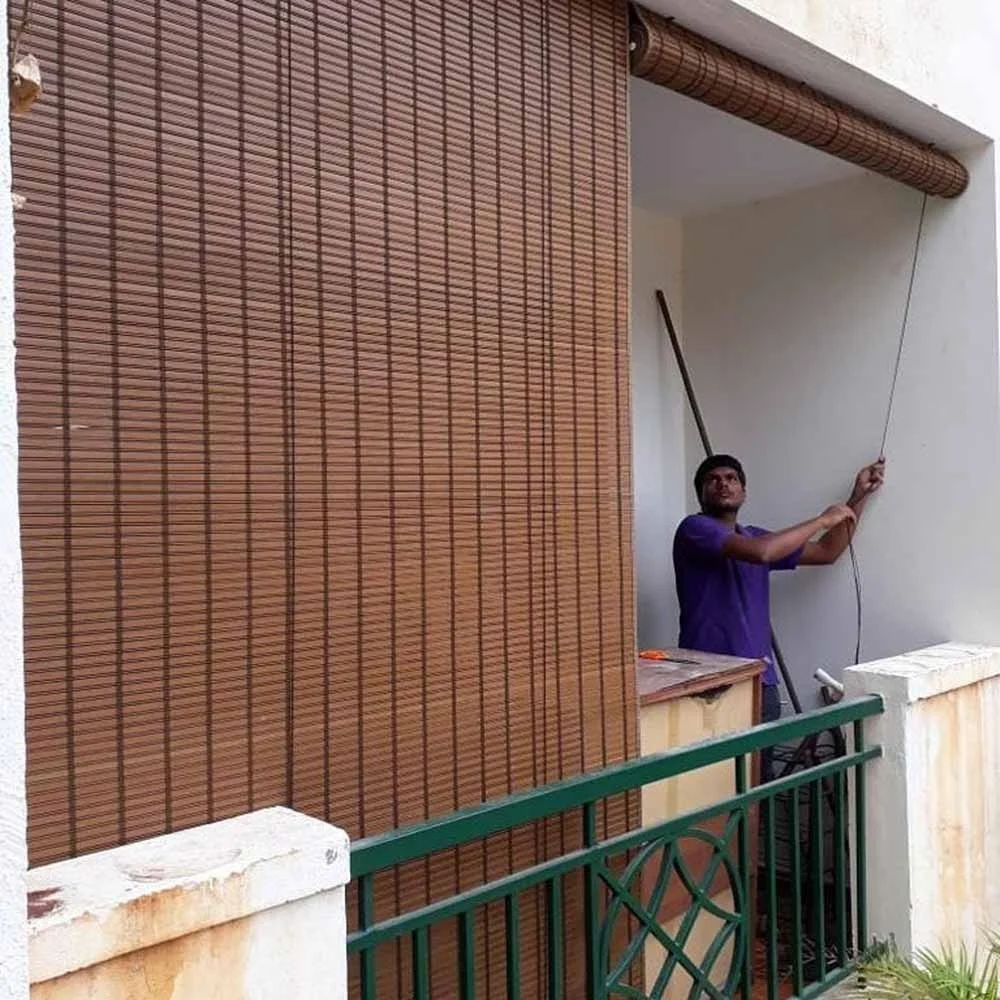
Bamboo chick blinds can be planned for windows, doors, balconies and divided bays. Wide openings can use multiple panels for easier operation.
Repairable construction
Some cords, pulleys and bindings can be repaired or replaced, depending on how the blind was made and the condition of the bamboo.
Disadvantages and limitations
Not automatically waterproof
Untreated natural bamboo is not fully waterproof. Repeated direct rain, standing moisture and poor drying can lead to staining, swelling, mould or faster deterioration.
Privacy varies
An open weave may reveal silhouettes, particularly at night. Tighter weaving or backing improves privacy but reduces airflow and light.
Not complete blackout by default
Light can pass through the weave and around the edges. A liner or secondary curtain is needed when strong room darkening is essential.
Natural variation
Colour can change over time with sun exposure. Adjacent blinds may not look mechanically identical in the way printed synthetic fabric does.
Weight on large sizes
A very wide blind can be heavy. Dividing the opening into panels often improves lifting, access and long-term balance.
Indoor, covered outdoor or exposed outdoor?
| Location | Suitability | Planning note |
|---|---|---|
| Indoor window | Very suitable | Choose weave according to privacy and light. |
| Covered balcony | Suitable | Protect from repeated direct rain and allow drying. |
| Open terrace edge | Conditional | Wind and rain exposure require suitable material and strong fixing. |
| Regular direct rain | Natural bamboo may be unsuitable | Consider PVC or another weather-resistant option. |
| Bathroom | Conditional | Ventilation and moisture exposure must be assessed. |
How to improve bamboo blind privacy and durability
- Select a closer weave or add a privacy backing.
- Use sufficient wall overlap for outside mounts.
- Divide wide openings into balanced panels.
- Keep natural bamboo away from standing water.
- Raise wet blinds only after they have dried sufficiently.
- Remove dust with a soft brush or low-suction vacuum.
- Inspect cords and supporting points before they become worn.
Who should and should not buy bamboo blinds?
Bamboo is a strong choice for people who value natural materials, soft daylight, ventilation and handcrafted character. It is less suitable for someone expecting laboratory-uniform colour, total blackout from an unlined weave or maintenance-free performance in constant direct rain.
The Chick Blinds can help compare natural bamboo, lined bamboo and PVC chick blinds according to exposure, privacy and décor.
Types of bamboo blinds are not all the same
The term bamboo blind can describe several constructions. A traditional chick blind uses narrow strips bound into a flexible screen. A woven-wood shade may combine bamboo, grasses or reeds with a textile backing. A bamboo-look roller may use printed or synthetic material rather than natural strips. Each behaves differently.
Fine, close weaving improves privacy and creates a more tailored appearance. Coarser weaving allows more light and airflow but may reveal silhouettes. Backing can improve privacy or room darkening, although it changes the natural transparency and ventilation. Edge binding protects the sides and adds a decorative finish.
Before buying, ask to see the actual weave rather than relying on the word “bamboo.” Compare strip quality, binding, pulley, cords and bottom weight. The beauty of the material cannot compensate for a weak lifting system.
Climate, moisture and maintenance
Delhi NCR combines dry dust, intense summer sun, humidity and seasonal rain. Indoor bamboo normally experiences less stress than a balcony blind. A covered balcony may perform well when the blind can dry, while an exposed edge receiving regular direct rain needs more caution.
Keep the blind free of accumulated dust using a soft brush or low-suction vacuum. Do not roll natural bamboo tightly while it is wet. Check cords, pulleys and upper supports periodically, especially before windy weather. Uneven lifting can twist a large blind and increase wear.
If the opening is frequently wet, PVC or another weather-suitable material may be the more practical choice. Selecting synthetic material for the correct exposure is often better than repeatedly replacing an unsuitable natural product.
Environmental claims and long-term value
Bamboo grows rapidly, which is one reason it is often described as an eco-friendly material. However, the environmental value of a finished blind also depends on sourcing, treatment, shipping, backing, hardware and useful life. Avoid assuming that every bamboo-labelled product has the same impact.
A well-made blind fitted in the right place can remain useful longer and may allow repair of cords or bindings. A poor-quality product exposed to conditions it cannot tolerate may become waste quickly. Durability, repairability and honest maintenance instructions are important parts of responsible buying.
How to compare bamboo blind samples before ordering
Photographs can show colour, but they rarely reveal the true openness of a bamboo weave. Hold the sample against a bright window and view it from inside and outside. Check how much detail is visible through the gaps, whether the colour changes in direct sunlight and how the edge binding looks beside the wall or frame. Repeat the test at night with the room lights on if privacy matters.
Flex the sample gently to understand its stiffness and inspect the back. Look for rough splinters, irregular binding, weak thread or a coating that flakes when bent. Ask whether the sample represents the final production material or only a display piece. Natural variation is expected, but the grade and construction should still be consistent.
For a large order, confirm how adjacent panels will be matched. Exact colour identity may not be possible with natural bamboo, yet obvious differences can be reduced by preparing panels from a similar batch. Also ask about bottom weight, pulley quality and the method used to keep a wide panel rolling evenly.
Finally, compare the sample with the actual exposure. A beautiful open weave may be unsuitable for a bedroom requiring night privacy, while a dense backed blind may reduce too much airflow on a balcony. The best sample is not simply the most attractive one; it is the one that performs correctly in the intended location.
Frequently asked questions
Are bamboo blinds waterproof?
Untreated natural bamboo blinds are not fully waterproof. For repeated direct rain, use a material and fitting designed for weather exposure, such as suitable PVC options.
Do bamboo blinds provide privacy?
They can improve privacy, but the result depends on weave density, backing, side gaps and lighting. Open weaves may reveal silhouettes at night.
Do bamboo blinds block heat?
They can reduce direct solar glare and shade the opening. Actual room-temperature impact also depends on glazing, gaps, orientation and how closely the blind covers the window.
How long do bamboo blinds last?
Life varies with bamboo quality, construction, sun, moisture, wind, operation and maintenance. Protected indoor or covered installations generally face less weather stress than exposed outdoor blinds.